

Neurotransmitters are the brain’s chemical messengers. They carry signals between neurons and make learning, memory, focus, and even basic survival possible. When we study, practise a new skill, or try to stay focused, we are not just “using willpower” we are working with a complex chemistry inside the brain.
In this article, we will look at four key neurotransmitters that play a major role in how we learn and grow: glutamate, acetylcholine, GABA, and dopamine. By understanding how they work together, we can design better study habits, protect our attention, and support our brain through the right lifestyle and nutrition.
Excitation and Inhibition: The Brain’s Go and Brake System
Every neuron in the brain is like a tiny decision-maker. At any moment, it is adding up two kinds of inputs:
- “Go” signals (excitation)
- “Stop/slow” signals (inhibition)
If the “go” side wins, the neuron fires and passes the message forward. If the “stop” side dominates, the neuron stays quiet. Neurotransmitters are simply the chemicals that carry these “go” and “stop” messages between neurons.
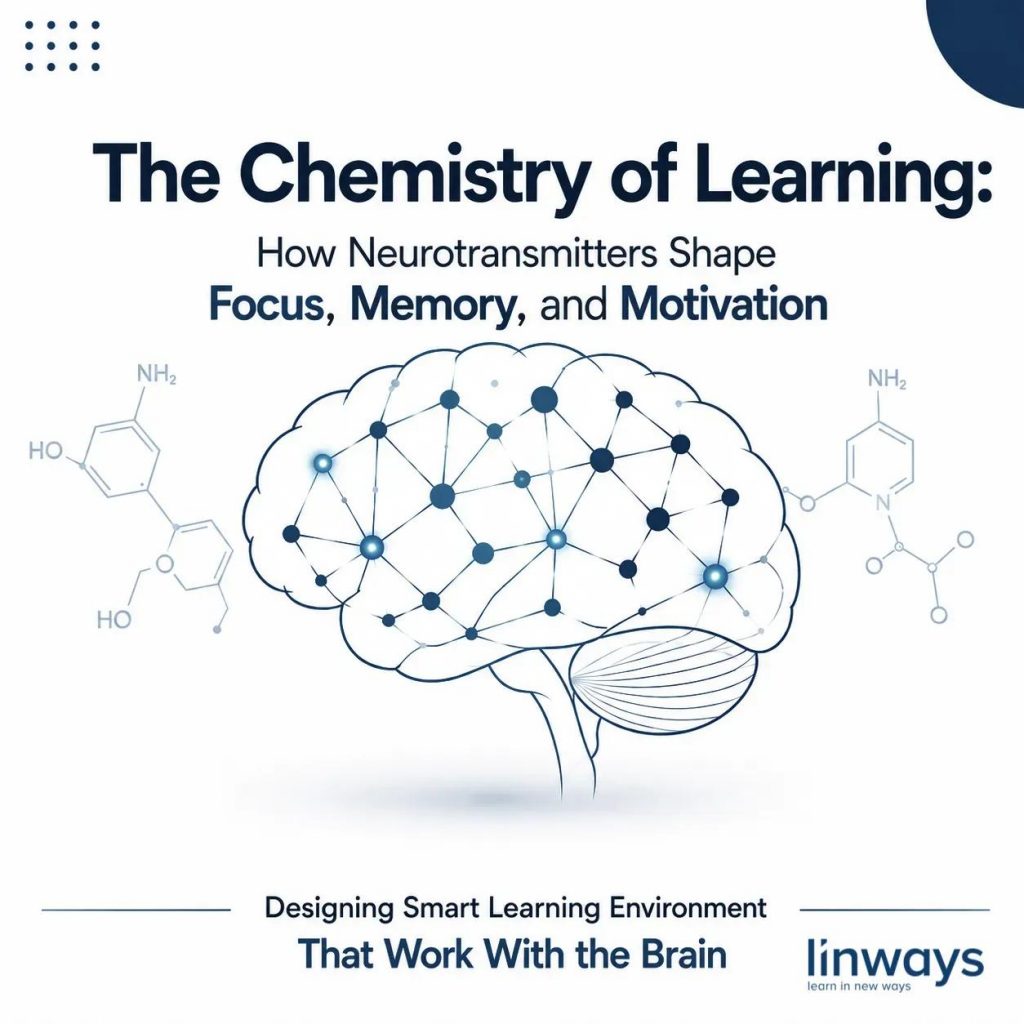
In learning, three of our messengers; glutamate, acetylcholine, and dopamine mostly help to activate, modulate and reinforce learning circuits. GABA plays the opposite role: it acts as the main brake, preventing overload and keeping brain activity stable and controlled. Sitting just before this chain is norepinephrine. It acts as the brain’s internal alarm bell, increasing overall alertness and signalling that “something important is happening.”
Let’s see how each one works.
Glutamate: The Memory Builder
Glutamate is the brain’s primary excitatory neurotransmitter. When glutamate binds to its receptors, it usually makes the next neuron more likely to fire. That makes glutamate central to:
- Forming new memories
- Strengthening connections with practice (long-term potentiation and neuroplasticity)
- Learning new skills
Glutamate is especially important for turning repeated practice into long‑term change in the brain’s wiring.
Example: Learning to ride a bicycle
When you learn to ride a bicycle, the brain repeatedly releases glutamate across the pathways that control balance, steering, and coordinated movement. With each attempt, this excitatory signal strengthens those synaptic connections. Over time, the network becomes so strong that balancing and steering feel automatic. What started as effortful trial and error became “muscle memory.”
Because glutamate is such a strong “go” signal, too much of it for too long can over-excite neurons and become toxic.
Acetylcholine: The Focus Spotlight
If glutamate is the brain’s general “go” pedal, acetylcholine is the focus and wake‑up signal. It is also broadly excitatory, but in a more targeted way.
Acetylcholine helps to:
- Sharpen attention (like a spotlight on what matters now)
- Support working memory and learning
- Trigger muscle contraction in the body
When acetylcholine levels rise in specific brain regions, they tell the system: “Wake up, pay attention, focus here.”
Example: Riding the bicycle with focus
In the first attempts at cycling, acetylcholine acts as the brain’s initial alert signal. It sharpens attention so you can focus on balancing, steering, and pedaling all at once. By increasing alertness and modulating working memory, it filters out much of the irrelevant background so you can consciously coordinate your movements and avoid falling.
Norepinephrine: alarm bell / global alertness
Before the brain can focus, it has to wake up. Norepinephrine (noradrenaline) acts like an internal alarm bell, increasing alertness and signalling that something important is happening. Once this general alert state is in place, acetylcholine steps in as the focus spotlight. It narrows our attention onto specific information, increases working memory, and filters out distractions so the brain can process what truly matters.
Example:
When you first get on the bicycle, a small surge of norepinephrine raises your alertness: your brain recognises that this is a new, slightly risky task. On top of that, acetylcholine acts as the initial alert signal that sharply focuses your attention on balancing, steering, and pedalling.
GABA: The Brain’s Natural Brake
If glutamate is the main “go” signal, GABA (gamma‑aminobutyric acid) is the brain’s main slow down or “brake”. It is the primary inhibitory neurotransmitter.
When GABA binds to its receptors, it makes neurons less likely to fire. Functionally, GABA
- Prevents cognitive overload
- Calms runaway excitation (keeps glutamate in check)
- Supports focus, emotional stability, and sleep
Without GABA, the brain’s activity could easily become noisy and chaotic. In learning, that would feel like being overwhelmed, anxious, and unable to concentrate.
Example: Staying calm on the bicycle
While glutamate and acetylcholine are helping you learn to ride and focus on steering, GABA works in the background as a stabilizer. It quietly suppresses distractions such as nearby traffic, distant noises, or irrelevant thoughts, helping you stay calm, steady, and clear‑headed. This prevents the system from “overloading” when many signals are competing for attention.
Dopamine: The Motivation Engine
Dopamine is often called the brain’s reward chemical, but this nickname is only part of the story. Dopamine is a modulator rather than a simple “excitatory” or “inhibitory” signal.
Dopamine
- Marks certain experiences as important or rewarding.
- Drives motivation, curiosity, and persistence.
- Supports habit formation by telling the brain, “This action worked-do it again”
Instead of simply making neurons fire or stop, dopamine changes how responsive certain circuits are to other inputs, especially glutamate. It selectively amplifies patterns that led to success.
Example: The internal green light on the bicycle
The first time you pedal a few metres without falling, there is a small spike of dopamine. That rush of “this feels good” is more than emotion. It is a message to the brain; this pattern of movements and efforts is worth remembering. Dopamine “tags” those circuits so that glutamate‑driven changes become stronger and more likely to be repeated.
Over many trials, dopamine helps transform occasional success into a stable skill by reinforcing the right patterns and encouraging you to keep practising.
A Neurochemical Synergy: How They Work Together in Learning
Real learning is rarely about a single neurotransmitter. It is the combination that matters.
When you learn a new skill like cycling or solving a difficult problem, or mastering a concept, the neurotransmitters work together something like this:
- Acetylcholine switches on the focus spotlight, priming your brain to pay attention to the task.
- Norepinephrine: alarm bell / global alertness, sitting just before acetylcholine in the learning chain.
- Glutamate acts as the memory builder, strengthening the synaptic connections that encode balance, sequences, and corrections.
- GABA provides the brake and stabiliser, filtering out background noise and emotional overload so practice remains manageable.
- Dopamine supplies the motivation engine, rewarding successful attempts and nudging you to keep going until the skill becomes reliable and automatic.
In short, learning to ride a bicycle or to master any new skill relies on a precise neurochemical synergy. Norepinephrine initiates alert, Acetylcholine directs attention, Glutamate builds the circuits, GABA keeps the system stable, and Dopamine provides the drive to repeat and improve.
This is also how neuroplasticity works in practice. Neuroplasticity is the brain’s ability to change its structure and connections in response to experience. Neurotransmitters are the tools it uses to decide where and when those changes should happen.
Supporting These Chemicals Through Habits and Lifestyle
Neurotransmitters are not only shaped by genetics; they are also strongly influenced by daily habits. Some simple practices support the chemistry of learning:
Balanced nutrition
- Adequate protein for amino acids that build glutamate, GABA, and dopamine.
- Choline‑rich foods for acetylcholine.
Good sleep
- Deep and REM sleep help consolidate the synaptic changes that glutamate and dopamine initiate.
Regular physical activity
- Exercise supports healthy dopamine levels and improves attention.
Managed stress
- High, chronic stress can disturb GABA and glutamate balance and make focus and memory harder. Calm routines and recovery time protect the system.
Smart study habits
- Focused blocks of attention, spaced repetition, deliberate practice, and reflection all work with this chemistry instead of against it.
Mastering a new skill, then, is not just a mental challenge; it is a biological one. We are working with a living system that needs fuel, rest, balance, and the right patterns of effort.
Bringing It Back to Learning and Development
For learners, educators, and institutions, understanding these four neurotransmitters offers a practical message:
Learning is not magic and not fixed at birth. It is the outcome of how often and how well we engage specific circuits in the brain. When we design learning environments and personal habits that respect this chemistry, we make it easier for the brain to rewire itself.
By adjusting diet to include the right building blocks, protecting sleep, managing stress, and using learning strategies that respect the brain’s energy limits, we can turn the complex chemistry of focus, memory, and motivation into an advantage.
In such environments, progress depends less on brute willpower and more on well designed systems, spaces, tools, and rhythms that help the brain continuously adapt, deepen understanding, and improve the way it learns over time.
Book a personalized walkthrough with our higher education specialists.